

Table of Contents
- Assess Your Space: Start by accurately measuring your kitchen, including the heights, lengths, and widths, and note the positions of windows, doors, and utilities when preparing to choose kitchen cabinets. A simple sketch noting these measurements will be invaluable.
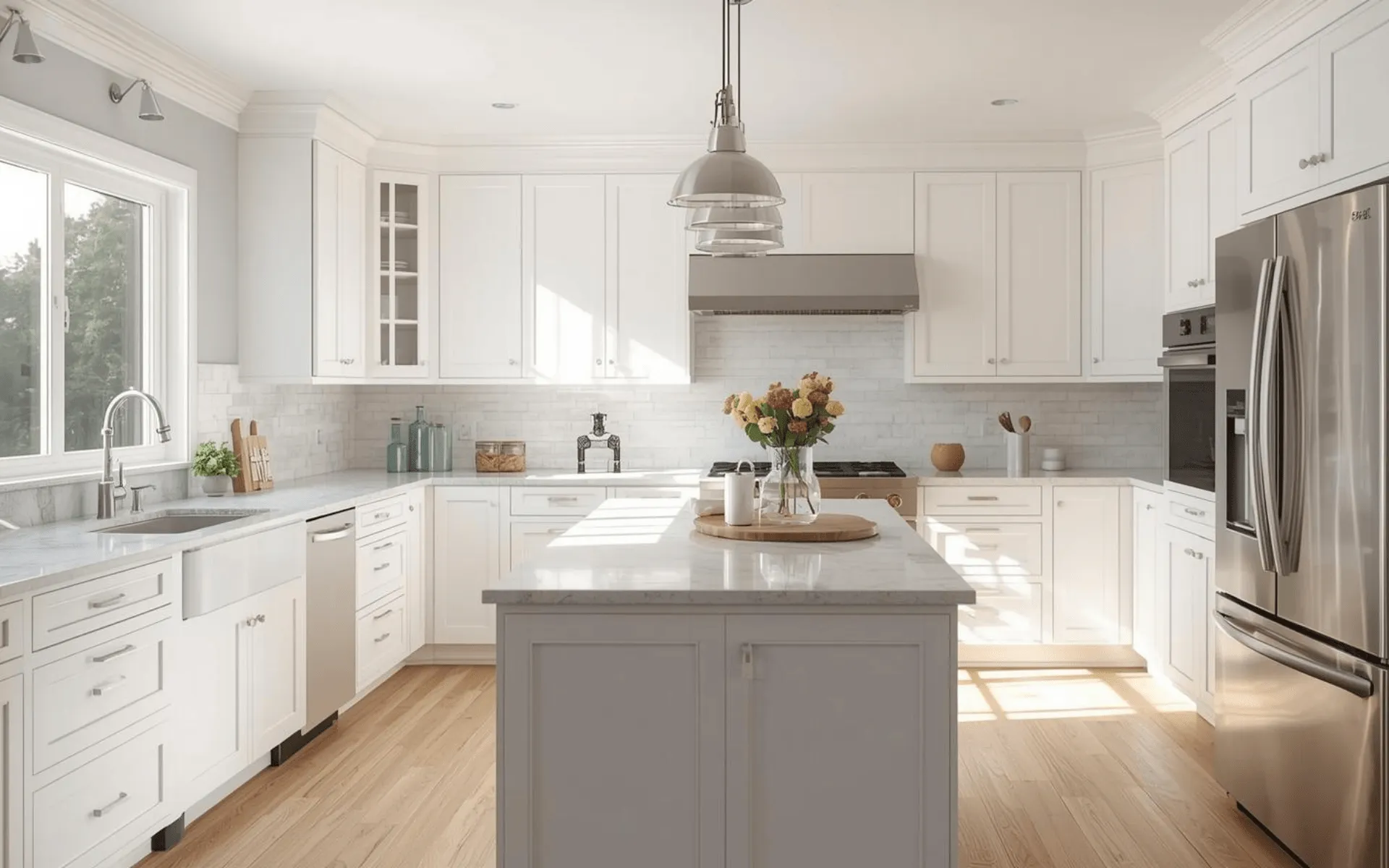
- Consider Your Kitchen Layout: Consider how each can influence your cabinetry choices for different kitchen layouts like U-shaped, L-shaped, galley, with islands, or a single wall. U-shaped kitchens can benefit from deep drawers and overhead cabinets, while L-shaped kitchens might use corner cabinets effectively. Galley kitchens, being narrow, require tall cabinets to save floor space, whereas islands in larger kitchens offer additional storage and prep areas but need careful placement. Single-wall kitchens should focus on multifunctional cabinets to maximize limited space. Remember, the goal is to facilitate smooth movement within the kitchen’s work triangle — the stove, sink, and refrigerator — ensuring your cabinetry choice enhances functionality and flow.
- Select the Right Material: Popular choices include solid wood, plywood, and MDF. Each offers distinct advantages in terms of durability, aesthetics, and cost. The knowledgeable staff can explain the pros and cons of each material to help you select the best fit for your needs.
- Choose a Door Style: Consider the style of your home and the mood you want to create. Look for showrooms with various door styles, allowing you to visualize them in your kitchen. Shaker, slab, raised panel – the door style significantly impacts the overall look of your kitchen.
- Explore Cabinet Finishes: Explore the design possibilities and choose a finish that complements your countertops, flooring, and kitchen palette. Look for a wide selection of beautiful, durable finishes to suit any taste. From painted finishes to natural wood grains, the cabinet finish plays a major role in the aesthetic.
- Pick the Perfect Hardware: Consider the hardware’s style, size, and finish to complement your cabinet doors and elevate the overall look. Cabinet hardware, including knobs and pulls, adds the finishing touch and enhances functionality. Design consultants can help you select hardware that perfectly blends your cabinet style.
- Ensure Countertop Compatibility: Consider the style and thickness of your countertops when choosing cabinets. Seek advice on cabinet styles and depths to create a seamless transition between your cabinets and countertops.
- Maximize Storage Solutions: Explore the various storage solutions to ensure your kitchen has ample space for all your essentials. Incorporate drawers, pull-out shelves, and lazy Susans to optimize storage and accessibility.
- Integrate Lighting: Consider under-cabinet lighting to illuminate your workspace and add a touch of sophistication. Consider incorporating lighting solutions into your cabinet design for improved functionality and aesthetics.
- Choose a Cabinet with a Warranty: Look for brands that stand behind the quality of their cabinets and offer comprehensive warranties to ensure your satisfaction. A strong warranty gives you peace of mind.
- Consider Eco-Friendly Options: Look for retailers offering eco-friendly cabinet lines that prioritize sustainability without compromising quality or style. Sustainable materials and responsible manufacturing practices are becoming increasingly important.
- Partner with Experts for Installation: Consider partnering with experienced professionals to ensure your cabinets are perfectly leveled, aligned, and secure, creating a long-lasting and beautiful kitchen. Proper cabinet installation is essential for optimal functionality and a flawless look.

Essential Components of a Kitchen Cabinet Wishlist
A kitchen cabinet wishlist is a comprehensive list that prospective renovators or builders compile to outline their preferences and requirements for new kitchen cabinetry. This list serves as a crucial tool in the planning phase of a kitchen remodel, ensuring that the final product aligns with the homeowner’s functional needs, aesthetic preferences, and budget constraints. Here are the key elements typically included in a kitchen cabinet wishlist:
Functionality Needs
- Storage Options: Detail the types of storage solutions needed, such as pull-out drawers for pots, utensil organizers, spice racks, or appliance garages to keep countertops clutter-free.
- Specific Uses: Note any specialized cabinet functions, such as corner drawers, tray dividers, or built-in recycling bins, that would enhance the kitchen’s usability.
Design Preferences
- Style and Finish: Specify preferred styles, such as modern, traditional, or transitional, along with desired finishes, such as painted, stained, or natural wood.
- Color and Texture: Identify color schemes that complement the kitchen design. You can specify textures if you want a particular material or effect (like matte or glossy).
Material Quality
- Construction Materials: Choose from options like solid wood, plywood, particleboard, or metal based on durability and appearance.
- Hardware: Choose high-quality hardware that matches the style and offers durability, such as soft-close hinges or custom handle designs.
Budget Planning
- Cost Considerations: Set a realistic budget for the cabinetry and note areas where cost savings are preferred or where investment in higher quality is desired.
- Long-term Value: To ensure the investment is worthwhile, consider the longevity and maintenance of the materials and styles chosen.
Eco-friendly Choices
- Sustainable Practices: List preferences for eco-friendly materials such as bamboo, reclaimed wood, or low-VOC (Volatile Organic Compounds) finishes that contribute to a healthier environment.
Technological Integrations
- Modern Innovations: Include desires for modern conveniences like integrated charging stations, under-cabinet lighting, or motorized cabinets that enhance the functionality and ergonomic comfort of the kitchen.
Customization Needs
- Personalized Features: Any unique customizations that reflect personal cooking habits or lifestyle needs, such as adjustable shelving, custom height counters, or hidden stations for small appliances.
Utilizing The Wishlist
A kitchen cabinet wishlist guides the homeowner through the selection process and aids designers and contractors in understanding and fulfilling the client’s vision. By detailing every aspect of the cabinet’s appearance, functionality, and quality, the wishlist helps create a beautiful and highly functional kitchen tailored to the homeowner’s specific needs and preferences. This proactive planning tool ensures that all elements are considered before the remodeling project begins, potentially saving time and money and ensuring satisfaction with the final result.
Conclusion
In conclusion, selecting the right kitchen cabinets involves more than just picking out a style or material—it’s about creating a cohesive space that enhances functionality and meets your aesthetic preferences. From the durability of the materials to the efficiency of the storage solutions, every aspect of your choice should contribute to a kitchen that not only looks great but also works well for your lifestyle.
Engaging experts, considering eco-friendly options, and ensuring the installations are done correctly are crucial steps in achieving a kitchen that balances beauty with utility. A detailed kitchen cabinet wishlist becomes an indispensable tool in this process, helping you to define your needs and communicate your vision effectively, ensuring that every element aligns with your long-term satisfaction and enjoyment of the space.
Share This Blog
Explore More BLogs
 Kitchen Remodeling Ideas
How to Choose the Right Kitchen Sink: A Complete Buying Guide
 Countertop Ideas
Granite vs Quartz Countertops: Which One Wins for Your Kitchen?
 Kitchen Cabinets
Best Kitchen Cabinet Parts for Long-Lasting Quality
 Kitchen Cabinets and Design
The Effects of Humidity and Heat on Kitchen Cabinets: Know It All
 Kitchen Cabinets and Design
The Truth on Medium-Density Fiberboard for Cabinets
 Countertop Ideas